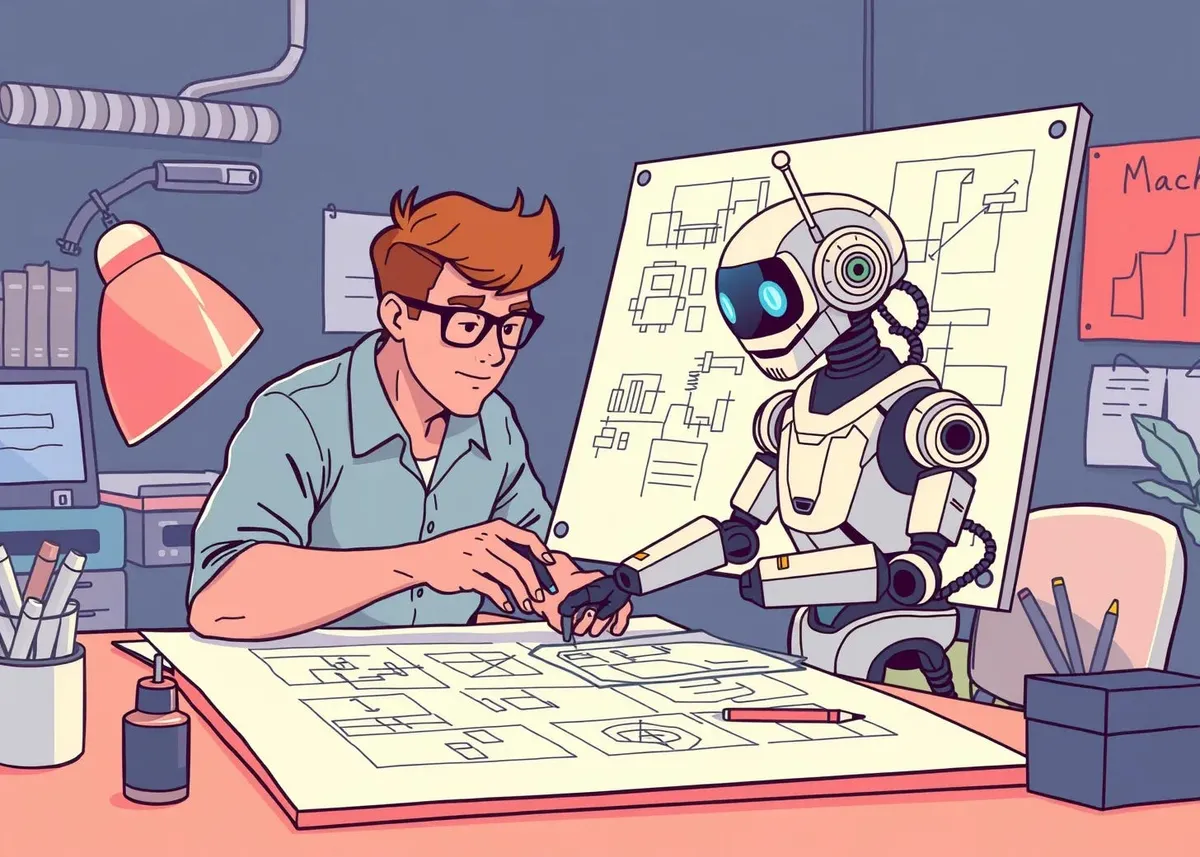
Your AI recap for 2024 and action guide for 2025

“The hallmark of expertise is no longer how much you know.
It’s how well you synthesize.”
Adam Grant
In my conversations with leaders and teams navigating the AI revolution, I’ve noticed something fascinating: while AI capabilities are advancing at breathtaking speed, the greatest challenges aren’t technical – they’re human. This disconnect isn’t just a problem, it’s a signal of where the real opportunities lie.
The AI Landscape: Beyond the Speed of Change
The pace of AI advancement has been remarkable. OpenAI’s o3 model achieved an unprecedented 87.5% on the ARC-AGI benchmark, compared to GPT-4’s 5% - a dramatic leap in adaptive intelligence. Meanwhile, the rise of efficient models shows a shift in thinking: Meta’s Llama 3 delivers impressive performance with significantly fewer parameters, while Apple’s OpenELM points toward powerful on-device AI capabilities. But the real story of 2024 isn’t just about model benchmarks - it’s about how AI has expanded into new frontiers.
Breaking New Ground
-
Voice and Audio Evolution: While voice AI isn’t new, 2024 marked the year it became truly practical. Google’s NotebookLM exemplifies this shift - its Audio Overview feature, which transforms written content into engaging podcast-style discussions, helped drive a 200% increase in user engagement (from 3.1 million to 9.2 million visits in October 2024). Meanwhile, platforms like ElevenLabs and Play.ai have reached a quality level that’s transforming content creation, making professional-grade voice production accessible to everyone.
-
Music and Creative Expression: Suno has taken AI creativity further, enabling personal music creation that carries emotional resonance - imagine creating a birthday song for your mom with AI that captures genuine sentiment. I did just that, it’s amazing.
-
Video Revolution: OpenAI’s Sora and platforms like Akool are moving AI video production from experimental snippets to commercial applications.
-
When you give AI a mouse: Claude 3.5’s Computer Use breakthrough is fascinating to watch - see for yourself how AI can now directly interact with computer interfaces, moving beyond mere information processing. OpenAI and Google are expected to follow suit, signaling a new era of AI capability.
The Real Transformation: From Tools to Partners
But perhaps the most transformative shift has been in how we’re beginning to work with AI. Andrew Ng, in his influential analysis of AI’s evolution, highlights how agentic workflows are revolutionizing our interaction with AI. He identifies four key patterns that make AI agents particularly powerful:
-
Reflection: AI’s ability to evaluate and refine its own outputs
-
Tool Use: Leveraging external resources and specialized capabilities
-
Planning: Breaking down complex tasks into manageable steps
-
Multi-Agent Collaboration: Different AI agents working together toward common goals
These patterns lay the foundation for what we at SprintImpact call “Human-AI Teaming” - a future where AI isn’t just a tool to be used, but a genuine partner in achieving outcomes. This isn’t just theoretical. Industry leaders are seeing this collaborative approach as fundamental to the future of work. Microsoft CEO Satya Nadella suggests that AI agents could transform traditional software paradigms into more dynamic, adaptive solutions. Meanwhile, YCombinator has highlighted how vertical AI agents – specialized in specific industry domains – could create a market potentially ten times larger than traditional SaaS by enabling genuine human-AI collaboration.
The Reality Check: When Innovation Goes Underground
With all these powerful capabilities and transformative potential at our fingertips, you might expect to see widespread, organized adoption of AI across enterprises. Yet, the reality tells a different story.
Research from Ethan Mollick at Wharton has uncovered what he calls “Secret Cyborgs” - employees who leverage AI technologies to automate tasks and improve efficiency but choose to keep their use of these tools hidden from their organizations. His research reveals a striking trend: over half of generative AI users are operating as secret cyborgs, driven by fears about job security and potential repercussions. This isn’t a story of rule-breaking – it’s a clear signal that organizations are missing a crucial opportunity for transformation.
When your most innovative employees feel they need to hide their AI usage, you’re losing:
-
Valuable insights from early adopters
-
Opportunities for collective learning
-
The ability to ensure safe and ethical AI usage
-
The potential for systematic improvement across teams
This disconnect between organizational readiness and individual innovation isn’t just a gap to bridge – it’s an opportunity to seize.
The Path Forward: Purposeful AI Leadership
As we look toward the future, successful AI integration requires both vision and practical action. At SprintImpact, we’ve seen how organizations thrive when they embrace these three key principles:
-
Lead from the Top
-
Start with Board and Executive AI literacy - leaders must understand AI beyond the hype
-
Focus on human dignity and common good
-
Develop clear AI vision and ethical guidelines that cascade through the organization
-
Model the behavior: be an active participant in the AI learning journey
At SprintImpact, we’ve designed intensive workshops for boards and senior executives that combine hands-on experience with strategic insights, creating the confidence leaders need to drive meaningful AI transformation.
-
-
Enable from the Bottom
-
Transform underground innovators into recognized pioneers
-
Create spaces for sharing learnings and best practices
-
Celebrate and reward innovative applications of human-AI collaboration
-
Support grassroots experimentation within ethical boundaries
Repair Givers initiative demonstrates this principle in action - we created Fixie AI, a support bot to assist volunteer home repair efforts, showing how AI can be leveraged not just for workflow efficiency, but to create genuine social impact.
-
-
Start Small, Learn Fast
-
Begin with focused use cases that deliver clear value
-
Build learning loops: implement knowledge base reinforcement that captures insights from both AI and human interactions
-
Design for human handoff from day one
SprintImpact AI-empowered WhatsApp solution showcases the power of intentional design. By combining multilingual LLMs, custom knowledge bases (RAG), and seamless WhatsApp integration, we create natural two-way conversations. But the real innovation lies in how we design the human handoff points and knowledge reinforcement loops - ensuring the system gets smarter while maintaining the human touch where it matters most.
-
Looking Ahead: Your 2025 Journey
As we step into 2025, remember that leadership in the AI age isn’t about knowing every new model or tool – it’s about synthesizing meaning from complexity and guiding purposeful transformation. The most powerful transformations happen not through speed, but through wisdom, and the most successful leaders will be those who can bridge the gap between technological potential and human flourishing, moving their organizations forward with clear purpose and vision.
The tools for transformation are here. What matters now is how purposefully we use them. Whether you’re a board member seeking to understand AI’s strategic implications or a team looking to implement your first AI solution, the time for meaningful action is here.
Here’s to your journey of purposeful AI leadership in 2025.